ATS systems demystified: what actually gets your CV through
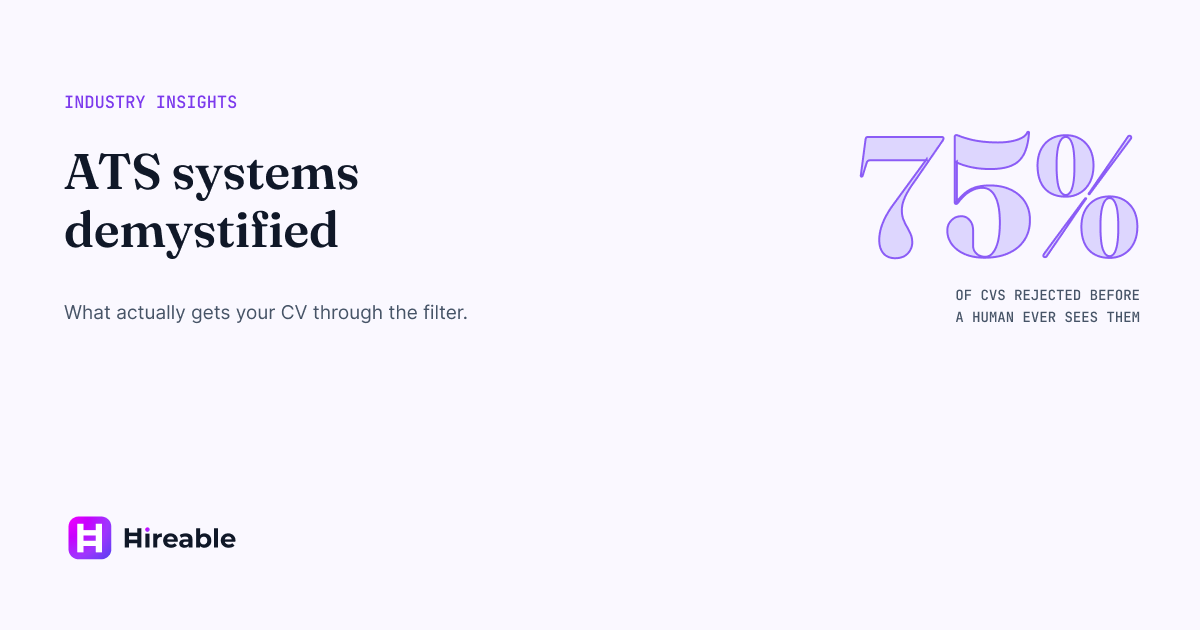
Applicant Tracking Systems have become the gatekeepers of modern recruitment. Nearly every mid-to-large employer uses one, and they process millions of applications daily. Understanding how these systems work is no longer optional - it's essential for any serious job seeker.
What ATS Software Actually Looks For
Contrary to popular belief, most ATS platforms don't simply scan for keyword matches. Modern systems like Greenhouse, Lever, and Workday use semantic parsing to understand the context of your experience. They extract structured data - job titles, dates, education, skills - and score candidates based on how closely their profile matches the role requirements. Formatting matters too: complex tables, headers in images, and unusual fonts can confuse parsers and cause your information to be misread or lost entirely.
"Your CV doesn't need to trick the ATS. It needs to speak its language."
Hireable automatically optimises your CV structure for ATS compatibility while maintaining the visual polish that impresses human reviewers. It's the best of both worlds: machine-readable precision with human-friendly design.